



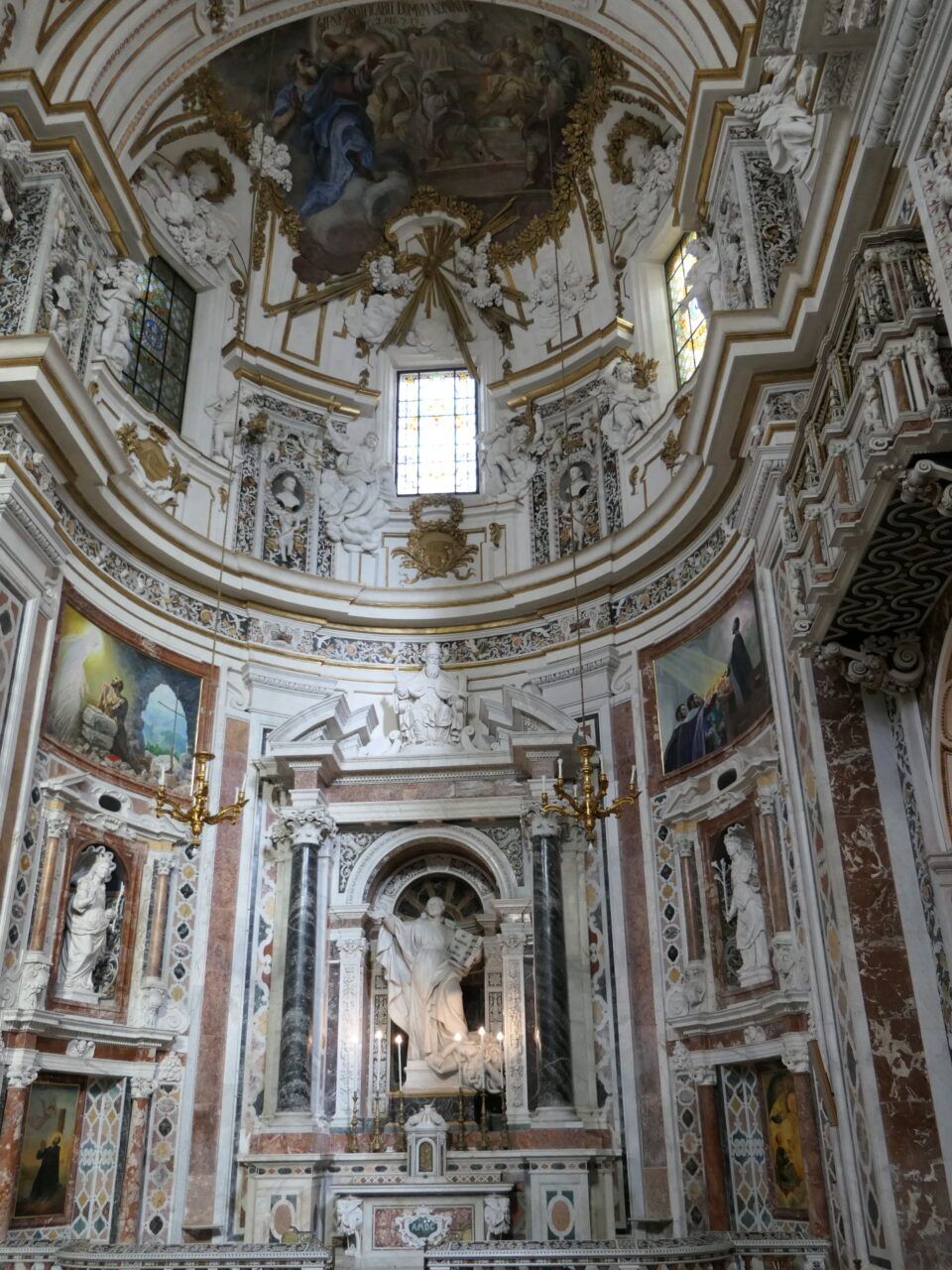


In Palermo, a city where almost every street leads to a church, there is one that surprises visitors only when they step inside. Like in the story of the black and white swan. Don't judge by the facade.
piše: V.Jovančić
As the capital of the largest island in the Mediterranean, Palermo has been a crossroads of civilizations for centuries. First the ancient Hellenes and Romans, and in later centuries the Normans, Arabs, Spaniards and, of course, Italians left their mark on the architecture, so today this Sicilian city seems like a layered map of history in which Romanesque domes, Baroque facades and Arabic ornaments alternate at almost every turn.
Among the dozens of churches that shape its panorama, one stands out not so much for its exterior appearance as for its interior, which is among the most sumptuous on the entire island — Chiesa del Gesù – Church of the Sacred Heart of Jesus, a famous church built on the foundations of a medieval temple dedicated to Saint Nicholas by members of the Jesuit order, the Society of Jesus, as members of this church order like to call themselves.
Modest on the outside, luxurious on the inside
Although it is located in the very heart of the historic center of Palermo and surrounded on all sides by ancient aristocratic palaces, mysterious libraries and other churches, to get to it, you need to make a little effort. Tucked away in a tangle of tiny streets, it usually remains out of sight of tourists and visitors. You simply don't stumble upon it by chance.
Seen from the street, this relatively small Jesuit place of worship doesn't try to impress. The facade is austere and classical, as if deliberately concealing what lies behind the thick wooden doors.
But it is precisely in this contrast that its strength lies. Inside, a completely different story begins.
The walls, columns, and vaults are covered in layers of marble in various colors—red, green, gold, and gray. The stone is worked so precisely that it resembles a mosaic or a painting. The marble figures create intricate geometric patterns, floral motifs, and reliefs that seem almost unreal.

This lavish style was developed at a time when the Society of Jesus used art as a powerful means of expressing faith. In the late 16th and 17th centuries, at a time when the Baroque style was flourishing throughout Europe, Sicilian craftsmen also began to experiment with the technique of inserting thin slabs of marble of different shades into stone surfaces, creating a rich decoration that eventually became the hallmark of Sicilian Baroque.
U Church of the Heart of Jesus this style reaches its peak. The light that enters through the tall windows flows over the marble surfaces and changes their color throughout the day. The space seems alive, almost moving, as if the walls breathe together with the light.
Stone as a color palette
What makes this church special is not just the amount of decoration, but the way the stone was used. Marble of various shades — from deep red to emerald green — was cut into thin slabs and fitted together like pieces of a mosaic.
The result is an interior that resembles more of a giant painting than architecture. From a distance, the walls appear painted, but when you get closer you realize that every line and detail is carved into the stone.
Therein lies the true magic of Sicilian Baroque: in the patience of the masters who treated stone like paint.
Modest on the outside, luxurious on the inside
The fate of this church, however, was not always bright. During World War II, Palermo suffered heavy bombing, and this one was also badly damaged. The dome was partially collapsed, and a large part of the interior was destroyed.
The restoration took decades and required extraordinary precision to reassemble the intricate marble decorations that once again adorn the church today.
Today, as we look at its perfect interior, it is difficult to imagine how much effort and skill it took to restore the stone mosaic to its original splendor.
In a city known for its architectural contrasts — from Arab-Norman monuments to Baroque squares — the Jesuit cathedral remains one of the places where one can most clearly see how much art in Sicily was linked to patience, craft, and a sense of proportion.
And perhaps that's why this church leaves a special impression. After all, like the whole of Sicily. You never know where something will surprise and delight you.